
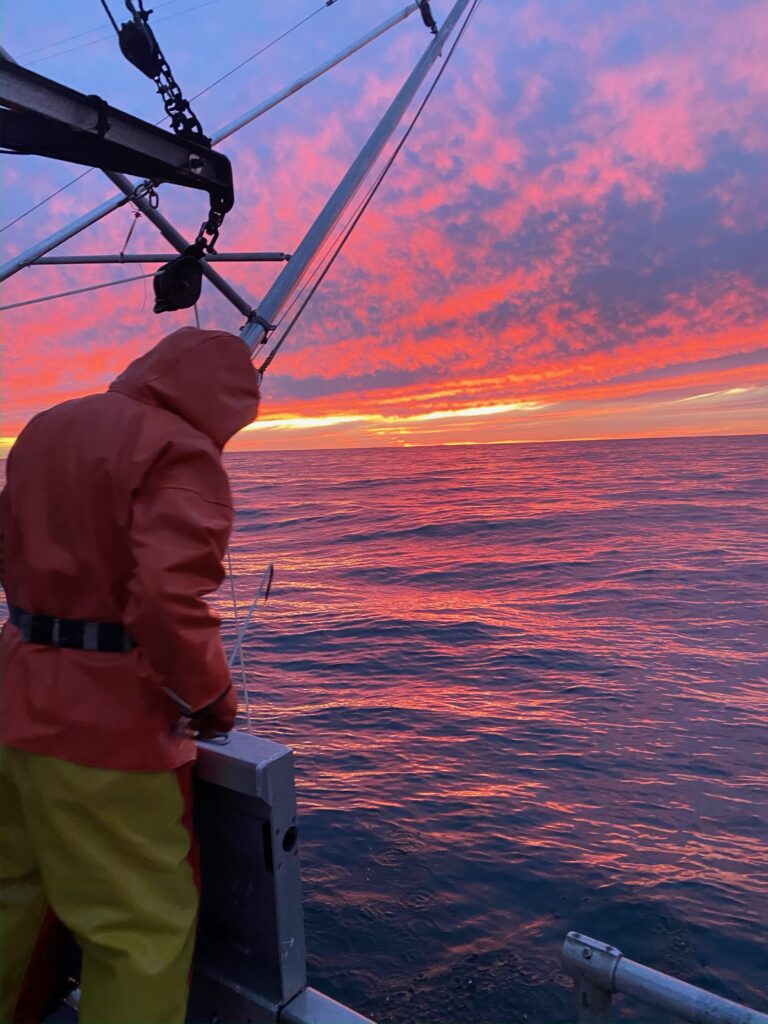
I grew up sailing with my family in the summers, which nurtured a deep love for the ocean and wild places. When I was 20, I decided to go to Alaska and had vague ideas about getting a job on a fishing boat to help pay for college.
It took a month to secure a fishing job. During that time I turned up to shovel fish holds or scrape and paint boats whenever someone would hire me. When I was finally offered a chance to fish, I loved it: the hard work, being on the ocean, and the camaraderie of the fishing community. I worked as crew for years, finishing college and going to graduate school on the east coast between seasons, before moving to Sitka and buying my own boat in the early 1990s .For a decade I ran my own boat in the summer and crewed on a bigger boat in the spring and fall, travelling out to the Bering Sea and Aleutian Islands.
Today, I am the executive director of the Alaska Longline Fishermen’s Association (ALFA), and have spent six years working to close Southeast Alaska to trawling. ALFA promotes sustainable small-scale fisheries and thriving fishing communities through policy engagement, collaborative research and education. Trawling has made a significant difference to the health of our marine resource and the ability for small boats to succeed in coastal fisheries in this region. On top of this, we are now feeling the impact of climate change, with greater swings in the abundance of our resources and stress on our salmon stocks.
Since I began fishing, the biggest change has been limited entry in state waters fisheries and individual fishing quotas in the federal halibut and black cod fisheries. These programs drove consolidation and substantially raised the cost of entry. They also made the fisheries safer and led to better prices, with more fish sold fresh rather than frozen, but the socioeconomic impacts have been considerable. Access to fisheries has all but disappeared from rural and Indigenous communities. As fisheries are critical to culture, food security and way of life in these communities, the threat is existential. Indigenous people who have stewarded these lands and waters since time immemorial are losing essential connection and many have been forced to leave for an uncertain future. Working with Tribes, the regional Native Corporation, and an indigenous-led community development financial institution, we have launched a number of programs to reverse that trend and residents are excited by the opportunity we are creating. It will take time and considerable resources, but we are committed.
With support from the Transform Bottom Trawling Coalition’s grants programme, ALFA is working to change policy in the Bering Sea and Gulf of Alaska to ensure pelagic trawls are actually fished pelagically, Fisheries managers are moving slowly, but they have started to review the impacts of pelagic trawling. We have built a strong coalition of commercial, sport and subsistence fishermen, working with environmental groups to pressure managers. We have also helped publicise the impacts of trawling, so it has become a huge issue in Alaska’s elections this year.
Pelagic trawls need to be fished off the seafloor, and bottom trawling needs to be severely restricted, if not stopped. It is changing benthic habitats, reducing ecosystem productivity and shifting species composition in Alaska’s waters; and indigenous and rural communities are paying the price.
In ten years, I want to see pelagic trawls with very limited or no seafloor contact and careful monitoring. If bottom trawling continues to be allowed, it should be allowed only in a severely restricted area. And I want bycatch cut significantly, so that coastal fishermen have access to the fish stocks that matter to them.
Scientists can keep documenting the impacts of trawling. The public can keep pressing politicians to appoint people to management positions who will restrict trawling and promote the health of the resource. And the TBT Coalition can keep building a strong coalition to push for change around the world.
Written by Linda Behnken, Alaska Longline Fishermen’s Association