

Dakshin Foundation is an India-based non-profit organisation working at the intersection of marine conservation, sustainable livelihoods, social development and environmental justice. Through our SeaChange approach, we work with small-scale fishing and coastal communities across India, while engaging government, researchers, civil society and industry to address intersectoral challenges affecting coastal and marine ecosystems.
Our work recognises that declining fish catches, climate change, biodiversity loss, changing markets and conservation conflicts cannot be addressed in isolation. We bring together diverse forms of knowledge and perspectives to create spaces where stakeholders can understand one another’s realities and identify pathways towards equitable and sustainable resource management.
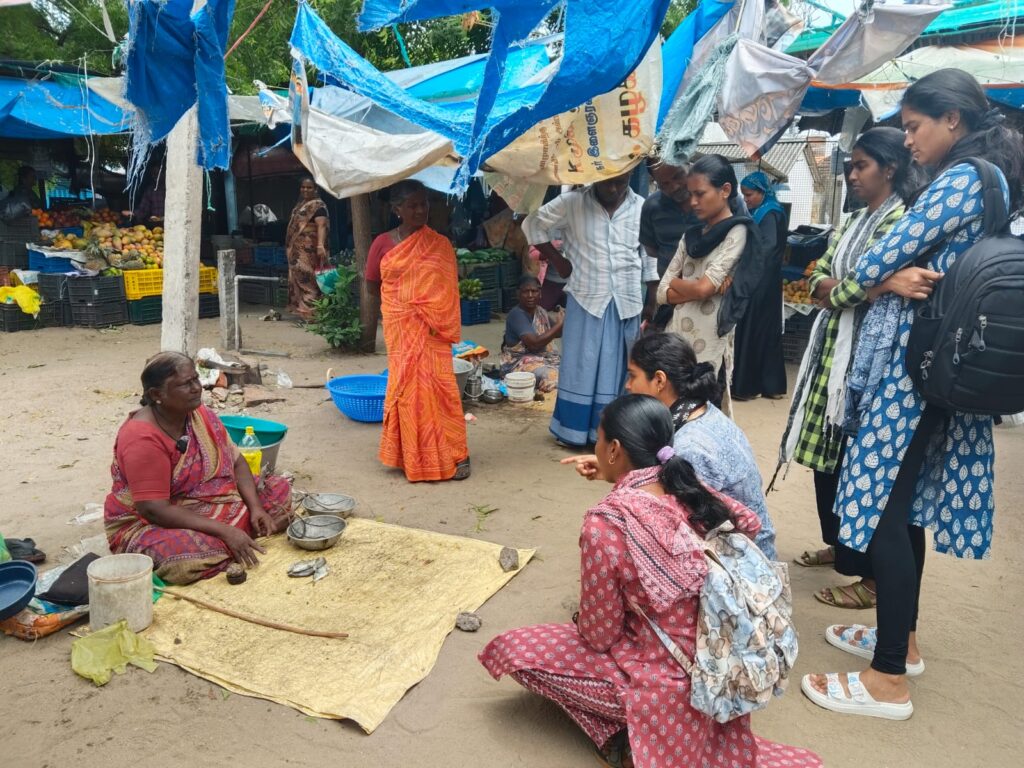
As a Senior Programme Associate in Dakshin’s Sustainable Fisheries Programme, my work focuses on understanding the ecological, socio-economic and nutritional implications of the growing fishmeal and fish oil (FMFO) sector, and how sustainability can be strengthened across its value chain. Over the past five years, we have built evidence from fishing communities and landing centres to understand where FMFO raw material comes from, who depends on these fisheries, and how fish move into increasingly globalised supply chains, particularly as animal feed.
Our work demonstrates that multiple actors along the fisheries value chain, including consumers, retailers, large export companies and local intermediaries, have a significant influence on fisheries sustainability. Consequently, the focus of our work has shifted from asking whether a fishing practice or an actor’s operations is “sustainable” or “unsustainable” to asking where responsibility for sustainability sits across the value chain. In India, trawl fisheries are an important source of FMFO raw material, partly because of the large and diverse volumes landed, including bycatch. They are globally scrutinised for their impacts on marine ecosystems and small-scale fishing livelihoods. However, through a previously TBT-funded project, we found that rising input costs, declining catches and falling profits are placing considerable pressure on trawl fishers, with many questioning whether fishing offers a viable future for their children. At the same time, FMFO creates a market for fish with limited commercial value and can help sustain trawling operations, while the increasing diversion of resources towards FMFO markets raises concerns about local nutritional needs.
Our engagement also highlighted how ecological responsibility falls disproportionately on fishers, while downstream actors remain distant from the ecosystems and communities supplying their businesses. Many existing sustainability measures focus primarily on fishing operations, such as mesh size, seasonal bans, and engine horsepower, while comparatively less attention is given to the sustainability impacts and responsibilities of the actors further along the value chain. Our approach is therefore not to vilify particular groups, but to understand the drivers shaping fishing and market practices, to connect often-disconnected stakeholders, and to explore opportunities to strengthen equity, livelihoods, and sustainability.
With support from this grant money, we are transitioning from building evidence to collective action. We are establishing a Blue Food Futures (BFF) Coalition – an evidence-based, multi-actor advocacy platform bringing together a diverse range of stakeholders across the FMFO value chain whose livelihoods depend on these fisheries and markets. The coalition seeks to explore pathways for pre-competitive stewardship and more resilient fisheries, bringing together fishers and their organisations, trade associations, FMFO plants, feed manufacturers, aquaculture and shrimp processors, exporters, researchers, government and other relevant actors.
Our underlying question is that if a marine resource is shared across an entire value chain, shouldn’t the responsibility for sustaining it be shared too? Key outputs will include the establishment of the BFF Coalition, a collective action strategy and a white paper capturing shared priorities and recommendations.
Ten years from now, we hope fisheries sustainability is understood as a shared responsibility across the entire value chain, with decisions informed by ecological realities and the needs of small-scale fishing communities. We envision stronger, transparent and replicable mechanisms to address gaps in transparency and traceability, with sustainability embedded as a shared mandate across all dimensions, including the well-being of the communities involved in fishing.
Achieving this will require fishers, governments, industry, researchers and civil society to recognise their roles, strengthen transparency and co-create solutions. Platforms such as the BFF Coalition can help build the trust and shared understanding needed to move from individual interests towards collective responsibility for the marine resources on which we all depend.
Written by E. Haripriya, Dakshin
